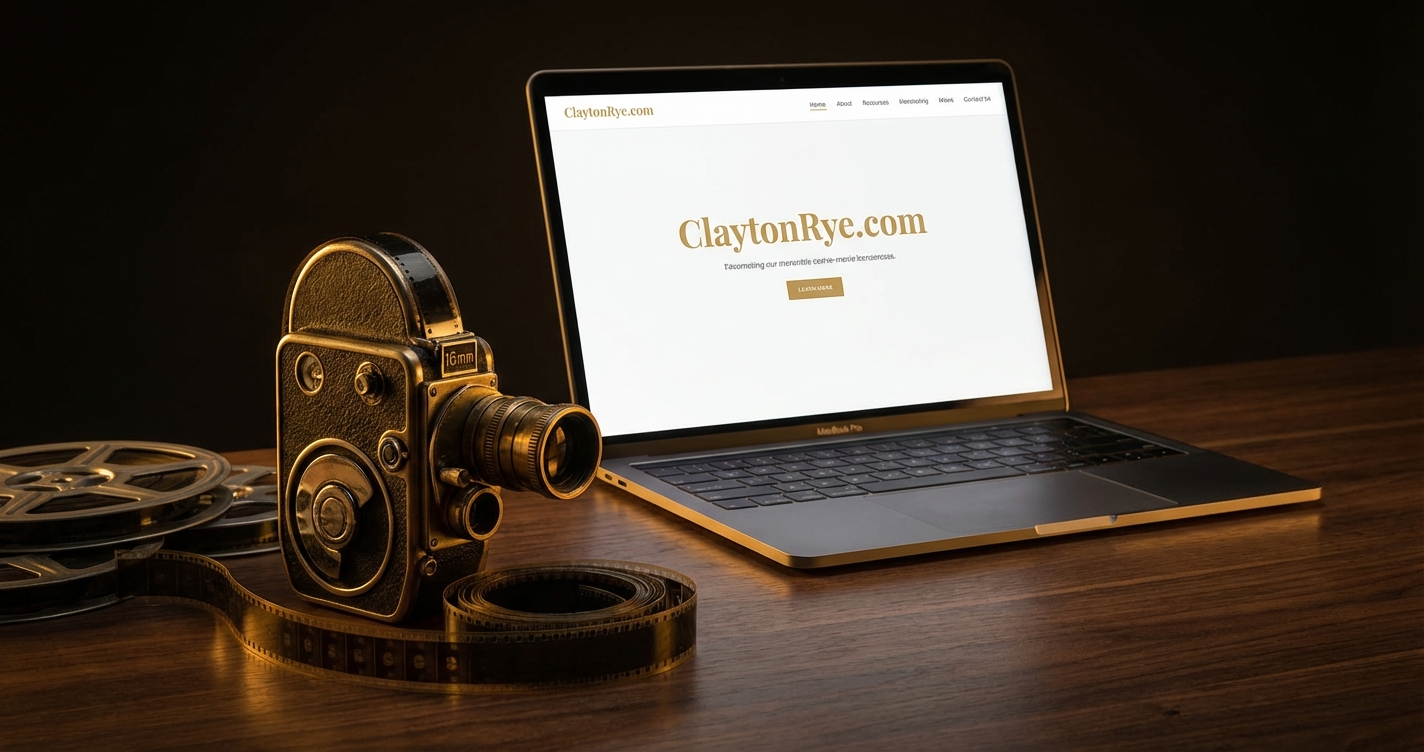
Today, October 29, 2025, my father Clayton Rye turns 77. To celebrate, I’m launching ClaytonRye.com, a website honoring his life as an award-winning documentary filmmaker, Vietnam War veteran, and Professor Emeritus at Ferris State University.
It’s a birthday gift, but really it’s a record of his life’s work: giving voice to the voiceless, preserving stories that might otherwise be forgotten, and teaching students that filmmaking is both a craft and a moral responsibility.
A Life Worth Documenting
My father’s story begins with the war. From 1968 to 1970, he served in the U.S. Army’s 1st Airborne Division as a radio operator, reaching the rank of Sergeant First Class. The war left a mark that shaped how he told stories for the next five decades: its complexity, its moral ambiguity, its human cost.
After Vietnam, he studied visual storytelling, earning a BA in Advertising from Michigan State University and an MFA in Cinema from the University of Southern California. Plenty of his classmates chased commercial work. Clayton went toward documentary, toward the stories that mattered and the voices that needed amplifying.
The Documentarian’s Mission
Over his career, Clayton made films that stand as historical documents. He wasn’t in it for entertainment or profit. The point was to bear witness, to record testimony, to make sure important stories survived for future generations.
Ten Vietnam Vets (1980s)
One of his earliest major works, Ten Vietnam Vets, featured firsthand accounts from fellow veterans. Having served himself, Clayton brought unique credibility and empathy to these interviews. The film won multiple awards including First Place at the Northwest Film Studies Center Festival and a Special Jury Award at the San Francisco International Film Festival. More importantly, it was selected for permanent preservation in the Texas Tech University and LaSalle University Vietnam Archives, so these testimonies would endure.
Jim Crow’s Museum (2004)
In collaboration with Dr. David Pilgrim at Ferris State University, Clayton created a documentary exploring the Jim Crow Museum of Racist Memorabilia. The film examines how objects of oppression can become tools for education. Confronting the painful artifacts of racism, it argues, can teach tolerance and promote social justice. The documentary won Best Documentary at multiple festivals and was broadcast on PBS stations nationwide.
Detroit Civil Rights Trilogy (2010)
Perhaps his most significant work, the Detroit Civil Rights Trilogy brought to light three pivotal stories from Michigan’s civil rights history:
Last Survivor of the Ford Hunger March: Dave Moore’s firsthand account of the 1932 Ford Hunger March at the River Rouge plant, where police opened fire on over 3,000 unemployed workers during the Great Depression, killing five.
Rosa Parks of the Boblo Boat: Sara Elizabeth Haskell’s 1945 challenge to segregation in Detroit, a full decade before Rosa Parks’ famous bus protest. When she was denied access to the dance floor on the Boblo Island ferry, she fought back and took her case to the Michigan Supreme Court.
Mr. Interlocutor of Mount Clemens: Duane Gerlach’s story of performing in blackface minstrel shows and his journey from participant to advocate, examining how these racist performances shaped American culture.
The trilogy won First Place for Documentary Feature at the Made-in-Michigan Film Festival in 2010, but its real value lies in preserving these stories before they were lost forever. Dave Moore was the last living survivor of the Ford Hunger March. Without Clayton’s work, his testimony would have died with him.
The Educator’s Legacy
In 1988, Clayton joined the faculty at Ferris State University, where he would spend the next 23 years teaching film production, television, and digital media production. Originally hired to teach film production, he adapted as the media landscape evolved, helping students master both traditional filmmaking techniques and emerging digital technologies.
His teaching came down to one belief: media creators have a responsibility to tell truthful, meaningful stories. Every frame, every edit, every story choice carried weight, he told his students. The technical skill was the easy part. What mattered more was listening, researching, and approaching subjects with respect and empathy.
Plenty of his students credit Clayton with teaching them that media can be a force for good. His legacy lives on in his films, and in the work of the filmmakers he mentored over more than two decades.

Building a Digital Legacy
When I started thinking about what to give my father for his 77th birthday, the answer was clear: his work needed to be preserved and made accessible. His documentaries are historical records. His story deserves to be told. And future generations should be able to find his life’s work and learn from it: researchers, educators, students, family members.
The Technical Challenge
Building ClaytonRye.com wasn’t a typical portfolio site or marketing page. It came with its own constraints, so it needed to be:
- Archival: Complete documentation of his filmography
- Respectful: Design that honored both the filmmaker and his subjects
- Accessible: Fast, responsive, and usable by everyone
- Discoverable: Properly structured for search engines and researchers
- Enduring: Built to last, not dependent on trendy frameworks or services
I built it on Astro, a static site generator that ships minimal JavaScript and puts content ahead of complexity. The result is fast and accessible, and it should still work years from now.
Design Philosophy
Every design decision followed Clayton’s approach to his films: keep it restrained, keep the focus on the stories.
Typography: Playfair Display for headings, a classic serif that carries some weight and dignity. The hierarchy keeps things clear without getting in the way.
Color Palette: A gold accent (#c9a961) adds warmth without pulling attention off the content. It holds up in both light and dark modes.
Layout: Open layouts with generous whitespace. The design stays out of the way of the content.
Performance: Images are responsive and optimized, videos load lazily, and pages come in fast.
Content Organization
The site is organized around five main sections:
Films: Complete filmography with detailed information about each work, awards, distribution, and historical context. Featured presentation of the Detroit Civil Rights Trilogy with embedded trailers and supplementary materials.
About: A full biography covering his path from Vietnam veteran to documentarian: education, career timeline, teaching philosophy, and key collaborations.
Service: Dedicated documentation of his Vietnam War service, including complete service record, historical context, and the connection between his military experience and documentary work.
Writing: Showcase of his written work, including his book Peckerwood and screenplay development.
Videos: A video archive with trailers, full documentaries where available, and supplementary content.
Technical Implementation
The site uses modern web tools while staying simple:
- Astro: Static site generation with component islands for interactivity
- Custom Backend: Content management and media handling
- Theme Switching: Light/dark/system mode with localStorage persistence
- Video Integration: Lightweight
lite-youtubecomponent for performance - Structured Data: Schema.org markup for discoverability
- Responsive Images: Optimized images with modern formats (WebP, AVIF)
- Accessibility: WCAG AA compliant with semantic HTML and keyboard navigation
The Stories That Matter
What strikes me most about my father’s work is how consistently he went after stories that matter. He never chased commercial success or trendy subjects. He went looking for the forgotten, the marginalized, the voices nobody else was recording.
Dave Moore’s testimony about the Ford Hunger March. Sara Elizabeth Haskell’s fight against segregation a decade before Rosa Parks. The painful history of blackface minstrel shows. Vietnam veterans’ firsthand accounts. The Jim Crow Museum’s mission to teach tolerance through confronting intolerance.
These aren’t easy stories, and they aren’t comfortable. But they’re essential, and without documentarians like Clayton Rye, they’d be lost.
Preserving What Matters
Most video today is made for views: algorithmic feeds, engagement metrics, the whole machine. My father’s work is a reminder of what documentary can be instead, a tool for education, empathy, and historical preservation. His films don’t chase likes. They record testimony and try to do right by the people in them.
Building ClaytonRye.com made me think hard about what actually matters here. It isn’t flashy animations or trendy design patterns. It’s clear presentation, accessibility, and something that will still be around in twenty years.
The Gift of Time
My father is 77 today. The last survivor of the Ford Hunger March was in his 90s when Clayton interviewed him. Sara Elizabeth Haskell’s story might have been lost if not documented. The Vietnam veterans in Ten Vietnam Vets are aging, their numbers dwindling.
Time is the enemy of memory. Stories fade, witnesses die, history gets forgotten or rewritten. Documentary filmmakers like my father push back against that. They preserve and they document, so the stories outlast the people who lived them.
This website is my contribution to that fight. By making his work accessible and properly documented, I’m helping make sure his five decades of storytelling keep teaching people long after any of us are gone.
Happy Birthday, Dad
Building this website has been one of the most meaningful projects of my career. Not for the technical challenges or the design work, but because it made me sit with the full scope of my father’s life. Going through his filmography, watching his documentaries, and writing all of this down left me with a lot of respect and gratitude.
Happy 77th birthday, Dad. Thank you for showing me that technology and creativity can serve purposes beyond profit and entertainment. Thank you for demonstrating that storytelling is a moral responsibility. Thank you for spending five decades giving voice to the voiceless and preserving stories that matter.
This website is my attempt to honor that legacy and ensure your work continues to inspire future generations.
Visit ClaytonRye.com: claytonrye.com
Technical Notes
For anyone curious about how it’s built, here are a few of the patterns I used:
Static Site Generation with Astro
Astro fit this project well. The site ships minimal JavaScript, just what theme switching and video embedding need. Content pages are pre-rendered HTML, so they load instantly and work everywhere.
Performance Optimization
A few things keep the site fast and accessible:
- Image Optimization: Responsive images with modern formats
- Lazy Loading: Videos and below-the-fold images load on-demand
- Critical CSS: Inline critical styles for instant rendering
- Font Optimization: Efficient web font loading with system font fallbacks
- Minimal JavaScript: Only essential interactivity included
Accessibility First
WCAG AA compliance ensures the site is accessible to everyone:
- Semantic HTML: Proper heading hierarchy and landmark regions
- Keyboard Navigation: Full keyboard accessibility throughout
- Screen Reader Support: ARIA labels and descriptive text
- Color Contrast: Compliant contrast ratios in both light and dark modes
- Focus Management: Clear focus indicators and logical tab order
Structured Data
Schema.org markup handles discoverability:
- Person Schema: Detailed biographical information
- FAQPage Schema: Common questions about Clayton’s work
- BreadcrumbList Schema: Clear navigation hierarchy
- Optimized Metadata: Proper titles, descriptions, and social sharing
The complete source code and technical details are documented in the ClaytonRye.com project page.
Have stories about Clayton’s films or teaching? I’d love to hear them. His work touched many lives, and preserving those connections is part of honoring his legacy.
Keep Reading
Companion projectClaytonRye.com
A digital archive of my father's five decades of documentary filmmaking, built for his 77th birthday and designed for long-term preservation.
View this project →Building Ask: A RAG-Powered Chatbot for My Portfolio
How I built Ask, the RAG chatbot on every page of this site: Cloudflare Workers AI, Vectorize, and the prompt-injection hardening it took to ship.
Second Reality: 32 Years of Demoscene Excellence
Future Crew's Second Reality turns 32. I downloaded it on a BBS as a kid; now it runs instantly in your browser via DosKit.
Subscribe
Was this helpful?
Discuss
Ask can help explain concepts, provide context, or point you to related content.